
Manpower supply in Saudi Arabia and the checks before the first shift

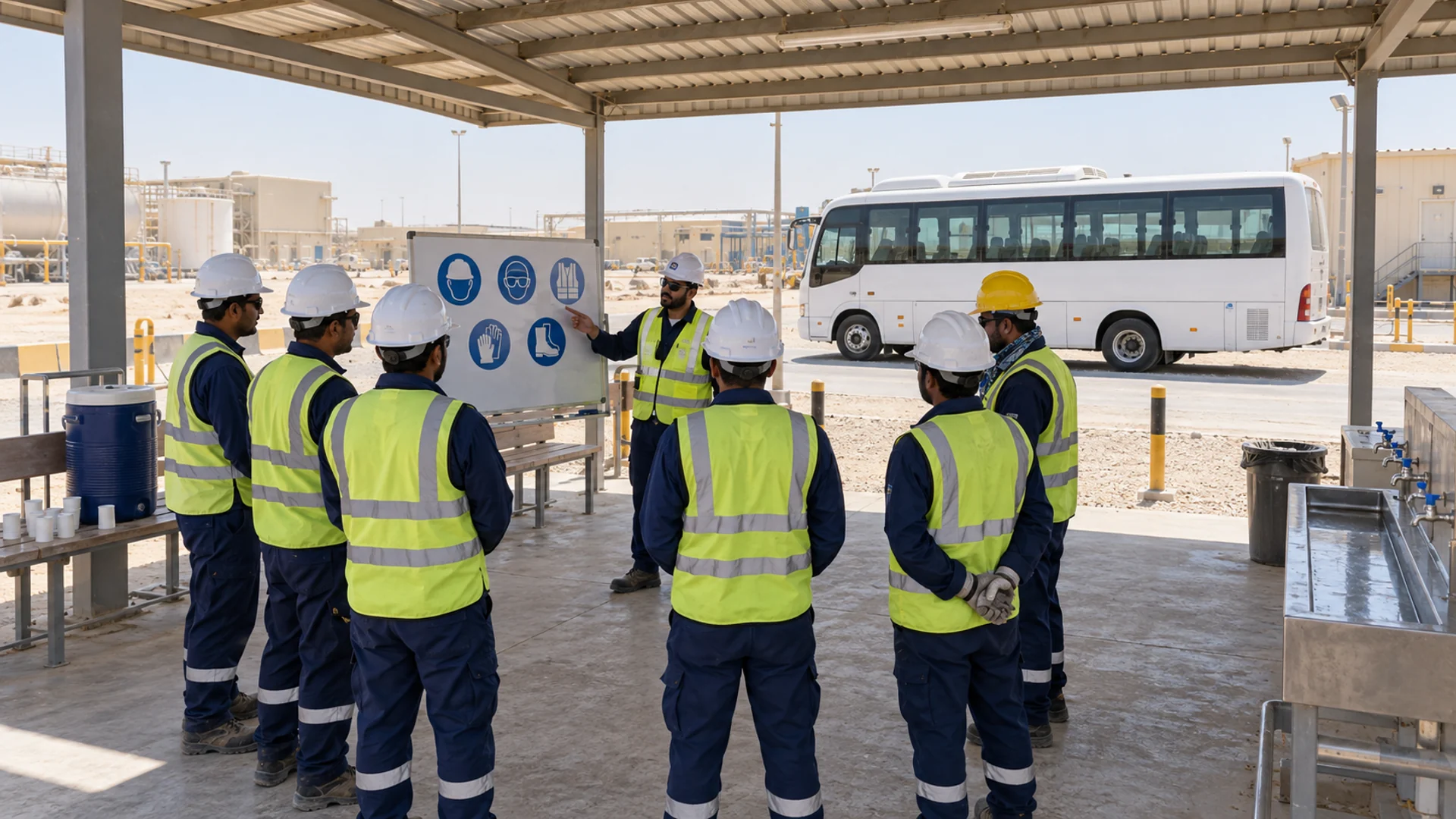
Quick answer: Before a supplied workforce starts at a Saudi project site, confirm the lawful deployment arrangement, the named workers and skills, site access, induction, supervision and welfare support. Record who accepts each item and who can resolve an outstanding issue.
The first shift should start with a complete handover between the supplier and the receiving site.
A mobilisation plan gets people to the project. The site still needs to be ready to receive them. Access lists, transport routes, supervisors and induction slots must match the workforce arriving.
This guide is for a project or operations manager arranging manpower supply in Saudi Arabia. It focuses on the final handover into work, after the recruitment and mobilisation plan has been agreed.
Key takeaways
- Confirm the required deployment documentation for the specific arrangement.
- Match the named workers and trade competence to the actual work package.
- Put supervision, induction and welfare support in place before the first shift.
- Keep a written handover and a clear process for additions, replacements and scale-down.
Confirm how the workforce will be deployed
Ask the supplier to identify the employing entity, the receiving establishment and the arrangement under which the workers will attend your site. Confirm the documentation required for that activity and location.
Saudi Arabia’s Ajeer contracting service enables outsourcing establishments to issue permits regulating the presence of their employees at beneficiary sites. Its published process includes a contract and permits for the relevant employees. Applicability and service conditions need to be checked for your arrangement.
Have the provider confirm the employment and site-deployment documentation together, including the permissions applicable to the named workers and receiving establishment.
The provider is responsible for meeting the Saudization (Nitaqat), occupation and establishment requirements that apply to the workers it deploys, and should confirm them for the specific assignment.
Match the worker list to the work package
Request a named deployment list through an agreed secure channel. It should identify the worker, trade, assigned supervisor and status of the documents the project needs to verify.
Then check the skills against the actual task. An electrician required for a particular installation may need different experience from someone supporting general maintenance. A forklift role needs competence for the equipment and operating environment involved.
Agree how trade tests, qualifications and any required professional verification will be evidenced. Where the project requires client approval of a skills assessment, record that approval before assigning the task.
Keep personal information restricted to those who need it. The site’s operational list can show that a requirement has been checked without circulating full identity documents to every supervisor.
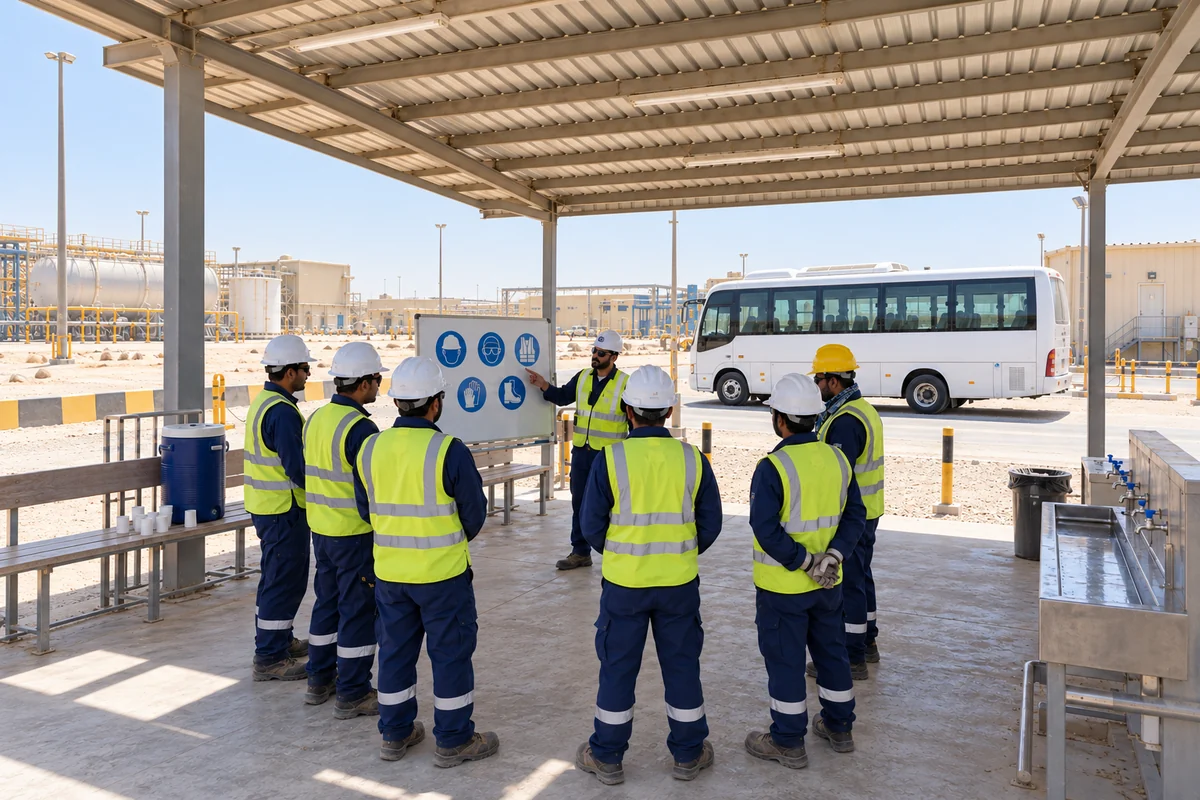
Plan the arrival as a site activity
Set an arrival window with security, the induction team and the receiving supervisor. Confirm which gate the vehicles will use, where workers will wait safely and how attendance will be recorded.
If the workers arrive in groups, the site needs capacity to process each group. Schedule induction and task allocation so that supervisors can give people the attention they need.
Check the first journey with the transport coordinator. Pickup time, route, access restrictions and the return journey all need to reflect the shift. Confirm the contact who can respond if a vehicle or access arrangement changes.
Put supervision and induction in place
Name the supplier supervisor and the client’s receiving manager. Agree who gives daily work instructions, who verifies attendance and who escalates a safety or welfare concern.
Induction should cover the actual site: emergency arrangements, reporting routes, pedestrian access, equipment restrictions and the task-specific risks people will encounter. Confirm that workers understand the briefing, using suitable language support where needed.
Check PPE against the task and the site standard. Record who supplies each item and who replaces it when required. A general induction should be followed by the specific instruction and authorisation needed for the assigned work.
Give supervisors a clear process to pause an assignment when a required condition has not been met. The issue can then be resolved by the responsible person before the work proceeds.
Verify the welfare arrangements
Confirm accommodation, transport, drinking water, rest arrangements and access to medical support for the actual workforce and shift. Ask who workers can contact about a concern outside working hours.
For outdoor tasks, align the roster and site arrangements with the applicable heat-protection requirements. HRSD’s guidance on working under direct sunlight explains the protective purpose of the seasonal measures. Confirm the current rules for the project’s activity and season, alongside the site’s ongoing heat-risk controls.
Keep responsibility for statutory employment costs clear in the service arrangement. HRSD’s guidance on costs borne by the employer confirms that recruitment fees, residence and work permit fees and their renewal are paid by the employer. Confirm with the provider that none of these costs are passed on to workers.
Ask for a clear payroll calendar and an agreed method of confirming payment. Keep site timesheet approval separate from commercial invoice reconciliation so that workers’ wages are never held up by a billing query.
Use a short handover record
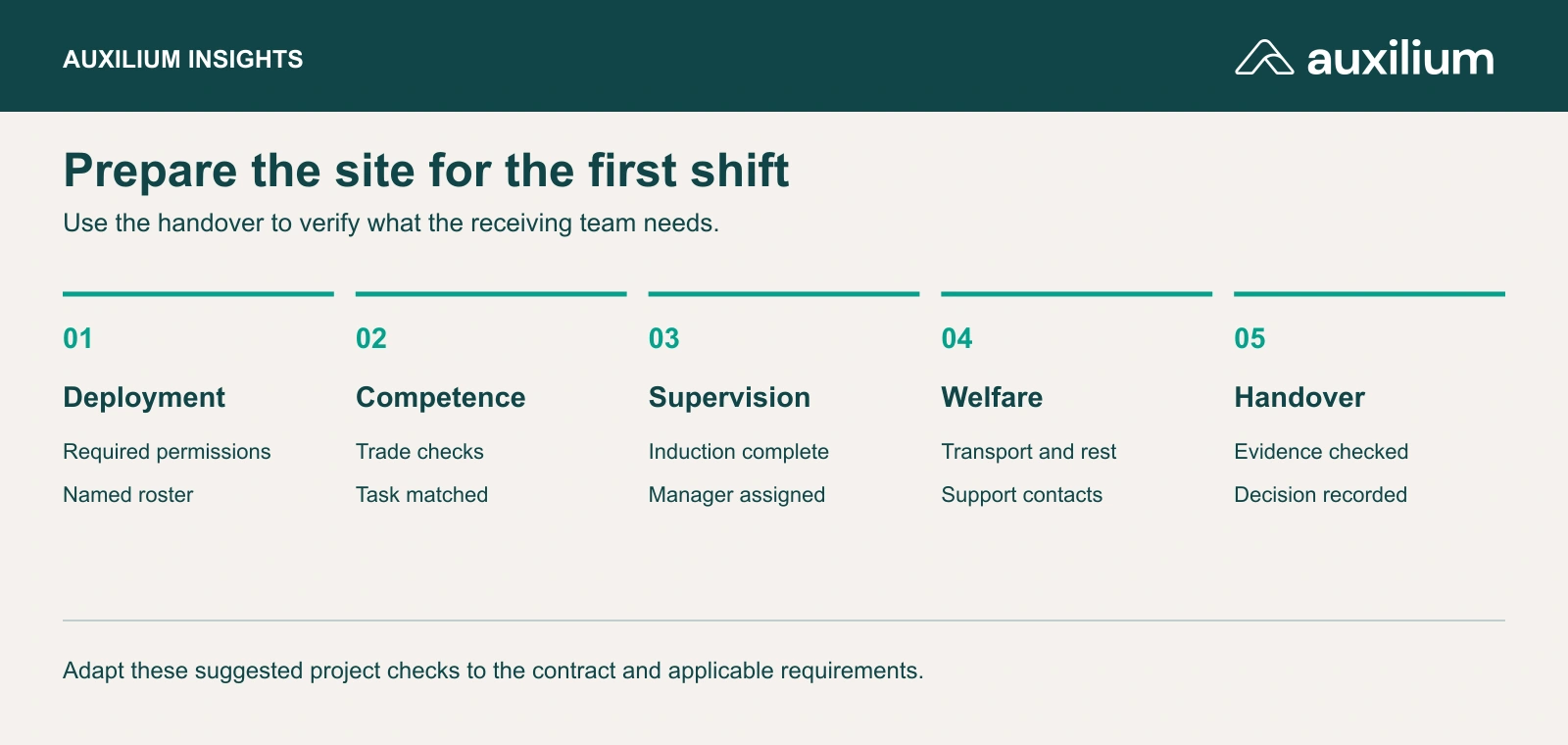
The record below is a suggested project control. Adapt it to the contract, site and applicable requirements; it is not an official government form.
- Deployment arrangement: Relevant contract, permissions and responsible entities confirmed
- People and competence: Named roster and required trade approvals checked
- Access and transport: Gate list, arrival window, route and return arrangements agreed
- Supervision and induction: Named supervisors, completed induction and task allocation
- Welfare and support: Accommodation, rest, water, medical and reporting arrangements confirmed
- Handover decision: Receiving manager, date and any outstanding items with owners
Review the record when workers change site or work package. An approval for one assignment should not be treated as a permanent approval for any task.
A worked example of a warehouse start
Illustrative scenario, not an Auxilium client case study. A distribution project in Riyadh plans to receive 80 operatives across two shifts. The workforce provider and receiving team coordinate the named roster, deployment documentation, induction schedule and supervision plan before arrival.
The site provides an induction slot and receiving supervisor for each shift. The transport coordinator aligns the outward and return journeys with the shift times.
Each group arrives with a defined reporting point, supervisor and induction plan. Each group’s arrival, induction and first task are scheduled against the same shift plan.
Keep control when the project changes
Additions and replacements should follow the same document, competence and induction checks as the first group. Agree how the supplier will update the roster and how the client will confirm access.
Plan scale-down before it arrives. Record the notice process, expected dates and how the provider will manage redeployment or employment closure. Workers should receive clear communication about changes affecting their assignment.
For the recruitment and arrival sequence behind this handover, see our guide to mobilising a project workforce.
Where Workforce+ fits
Workforce+ supports manpower requirements in Saudi Arabia, including recruitment, training and workforce support within the agreed service scope.
Share the site, trades, numbers by shift, dates and access requirements with the team. Include your induction capacity and the support services already available on site.
Preparing a Saudi site for supplied workers? We will build the receiving plan alongside your workforce brief. Speak to our team.
Disclaimer
This is general operational guidance. Confirm current Saudi employment, deployment and safety requirements for the specific project with the relevant authorities and qualified advisers.
Frequently Asked Questions
It depends on the arrangement. Where an assignment falls under Ajeer, workers should not start at the site until a permit naming that receiving establishment has been issued. Auxilium confirms the documentation that applies to each assignment.
Some information may be shared in advance. The site should still verify understanding and complete the location-specific and task-specific requirements before work begins.
Name the responsible receiving manager in the project procedure and agree the supplier’s counterpart. Both should know which evidence is required and how outstanding items are resolved.


Schedule a Free Consultation
Tell us what you’re looking for and we’ll handle the rest.
Let's talk!
Please provide your details, and one of our specialists will promptly reach out to you.